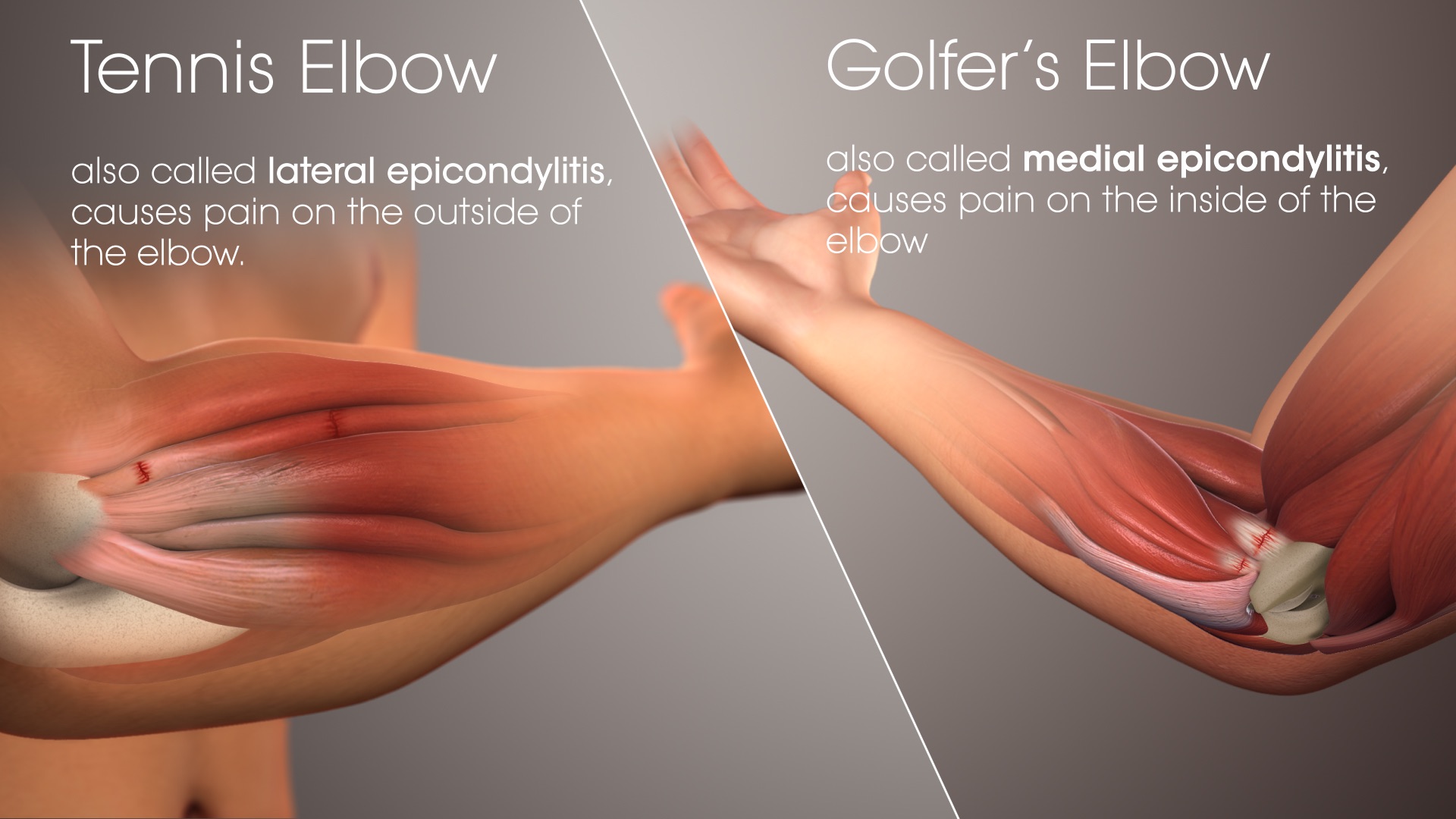
Tennis Elbow Symptoms, Causes, and Treatment (Lateral Epicondylitis)Tennis elbow, medically known as lateral epicondylitis, is a common overuse injury involving the tendons around the outer part of the elbow. It typically develops when the muscles and tendons in the forearm are repeatedly used for motions such as twisting, gripping, or swinging. These repetitive actions can strain the tendon that connects the forearm muscles to the elbow, leading to small tears, inflammation, and pain.
Although the condition is often associated with tennis players, anyone who performs frequent repetitive arm movements—such as painters, carpenters, or typists—can develop it. Most individuals recover with rest and conservative (nonsurgical) treatment over several months.
What Is Tennis Elbow (Lateral Epicondylitis)?
Tennis elbow occurs when repetitive stress or overuse causes irritation and small tears in the extensor tendon, which attaches the forearm muscles to the lateral epicondyle—the bony bump on the outer side of the elbow.
Despite its name, tennis elbow isn’t exclusive to athletes. Studies show that more than 90% of cases occur in people who don’t play tennis at all. Any activity that repeatedly involves gripping or rotating the wrist and forearm can lead to this condition.
When you hold your arms at your sides with your palms facing forward, the lateral side refers to the outer part of your elbow. The inflammation of this area gives the condition its full medical name: lateral epicondylitis.
Tennis Elbow Symptoms and Causes
Common Symptoms
People with tennis elbow often experience:
- Pain or burning sensation on the outside of the elbow.
- Stiffness or reduced range of motion in the joint.
- Swelling around the affected area.
- Weak grip strength, especially when holding objects like a cup, pen, or racket.
The discomfort can spread from the elbow down the forearm and may worsen with certain movements such as shaking hands, turning a doorknob, or lifting objects. The pain often intensifies at night or after repeated activity.
Which Arm Is Affected?
Tennis elbow most frequently affects the dominant arm, as this is the one used more often for daily activities or sports. However, in some cases, both arms may be affected simultaneously.
Tennis Elbow Causes and Risk Factors
The main cause of tennis elbow is repetitive stress on the forearm muscles and tendons, which leads to microscopic tears in the tendon tissue. Occasionally, a sudden injury can trigger similar symptoms.
You may be at higher risk if you:
- Are over 40 years old.
- Regularly lift heavy objects (over 45 pounds / 22 kilograms).
- Smoke or have obesity.
- Play sports or do work involving frequent arm motions (e.g., tennis, painting, carpentry, typing).
- Use tools or perform repetitive gripping and twisting tasks.
Potential Complications of Tennis Elbow
Tennis elbow rarely leads to serious complications. However, continuing to use the injured arm before it heals can increase the risk of a tendon rupture, which may require surgical repair.
Tennis Elbow Diagnosis and Tests
How Tennis Elbow Is Diagnosed
ALSO VISIT
A healthcare provider will begin with a physical examination to check for tenderness, pain, and strength in the affected arm. You’ll be asked about:
- When symptoms began.
- Which activities worsen or relieve pain.
- Your medical and occupational history.
Imaging and Diagnostic Tests
To confirm the diagnosis or rule out other conditions, your doctor may recommend:
- X-ray: To check for bone-related issues such as arthritis.
- Ultrasound: To visualize soft tissue structures and detect tendon tears.
- MRI (Magnetic Resonance Imaging): Provides detailed images of tendons and muscles.
- EMG (Electromyography): Used to rule out nerve-related problems that can mimic tennis elbow.
Tennis Elbow Management and Treatment Options
Conservative (Nonsurgical) Treatments
Most cases improve with simple, at-home treatments and physical therapy. Common approaches include:
- RICE Method: Rest, Ice, Compression, and Elevation to reduce inflammation and pain.
- Over-the-Counter Pain Relief: Nonsteroidal anti-inflammatory drugs (NSAIDs) like ibuprofen, or acetaminophen, can help manage pain and swelling. Always consult your provider if you plan to take them for more than 10 days.
- Physical Therapy: A physical therapist can teach specific exercises to stretch and strengthen the forearm muscles, improve flexibility, and prevent recurrence.
- Braces or Splints: Using an elbow or wrist brace helps reduce strain on the tendon and allows healing.
Advanced or Medical Treatments
If symptoms persist despite conservative therapy, your provider might suggest:
- Platelet-Rich Plasma (PRP) Therapy: A small amount of your blood is processed to concentrate healing platelets, which are then injected into the injured tendon.
- Corticosteroid Injections: These anti-inflammatory medications can offer temporary pain relief, although they’re less effective for long-term recovery.
- Percutaneous Tenotomy: A minimally invasive procedure where a needle is guided into the tendon to remove damaged tissue and stimulate healing.
- Shockwave Therapy: Uses focused sound waves to encourage tissue repair and improve blood flow.
- Surgery: Reserved for chronic or severe cases that don’t respond to other treatments. The surgeon removes damaged tendon tissue and reattaches healthy tissue to the bone.
When to See a Healthcare Provider
Seek medical attention if you experience:
- Severe or persistent pain that limits daily activities.
- Noticeable swelling or bruising around the elbow.
- Difficulty moving your arm or wrist.
- Pain that interferes with sleep.
- Symptoms lasting longer than one week without improvement.
ennis Elbow Outlook and Recovery Time
Prognosis
Most individuals with tennis elbow recover completely with proper care. Resting the affected arm, following prescribed exercises, and avoiding repetitive strain are key to healing.
Recovery Time
Recovery time can vary:
- Typical duration: 6 months on average.
- Extended cases: Up to 12–18 months, depending on tendon damage and adherence to treatment.
Your healthcare provider will guide when it’s safe to return to work, sports, or other physical activities. Gradual reintroduction of movements is important to prevent recurrence.
Common Questions About Tennis Elbow
What’s the Difference Between Tennis Elbow and Golfer’s Elbow?
Both conditions are repetitive strain injuries that affect tendons in the elbow, but they occur on opposite sides:
- Tennis Elbow (Lateral Epicondylitis): Affects the outer part of the elbow.
- Golfer’s Elbow (Medial Epicondylitis): Affects the inner part of the elbow.
Despite their names, both can occur in anyone who performs repetitive wrist and arm movements—not just athletes.
Summary: Understanding Tennis Elbow and Its Treatment
Tennis elbow is a treatable overuse injury that affects the tendons on the outer side of the elbow. With early intervention, rest, and proper rehabilitation, most people make a complete recovery and can return to normal activities without long-term complications.