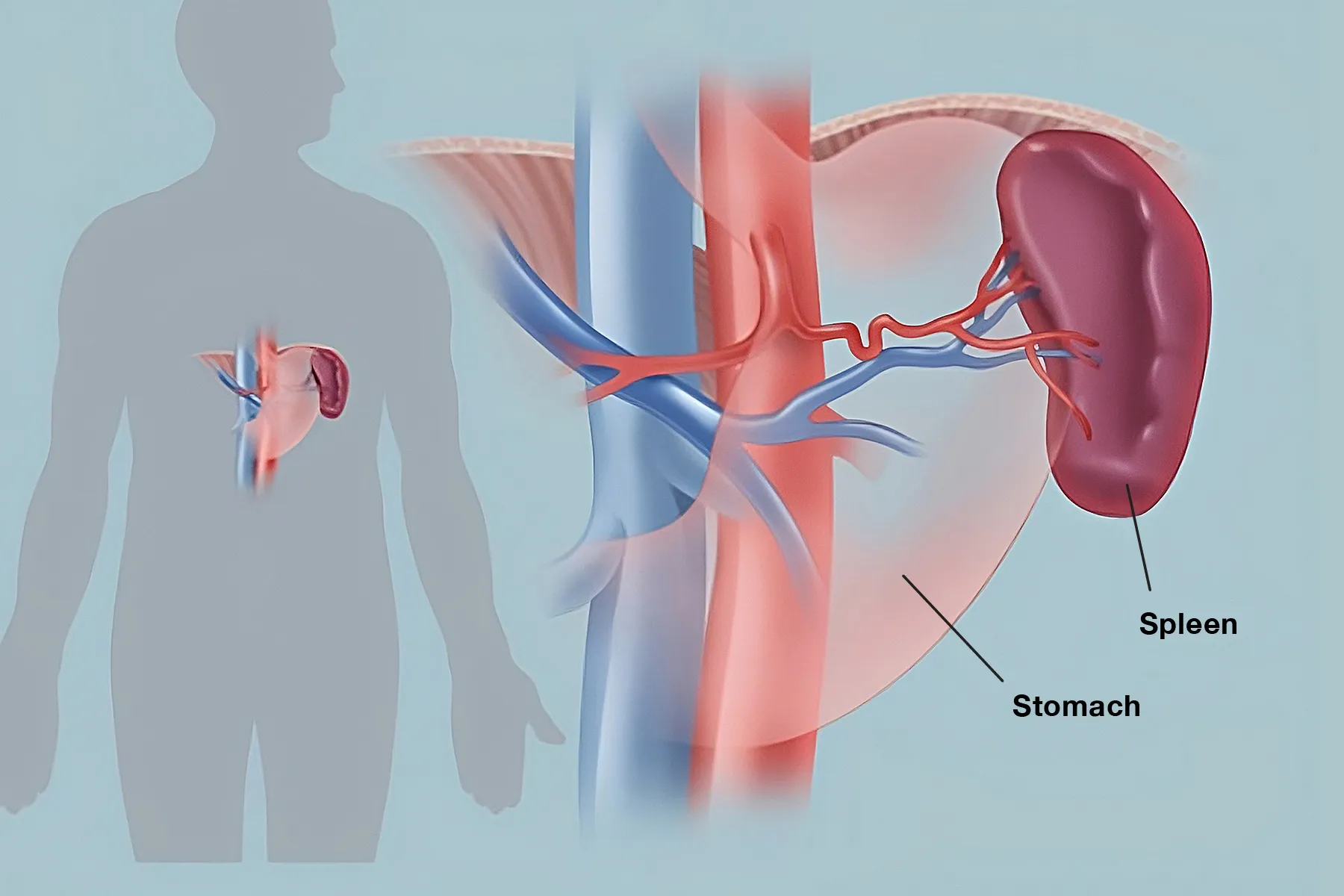
An enlarged spleen, medically known as splenomegaly, is not a disease by itself but rather a symptom pointing to an underlying health issue. It could be triggered by something as temporary as a minor infection or something more serious like liver disease or cancer. Proper diagnosis and treatment of the root cause are essential for managing this condition.
(Understanding the Role of the Spleen in Your Body)
The spleen is a soft, fist-sized organ situated on the upper left side of the abdomen, just beneath the ribcage. As part of both the lymphatic system and the immune system, the spleen plays a crucial role in:
- Filtering the blood to remove waste and damaged cells.
- Producing white blood cells that combat infection.
- Storing blood components like platelets and certain immune cells.
What Causes Splenomegaly or Swollen Spleen?
Normally, the spleen is about 12 centimeters long and weighs approximately 70 grams. However, due to various health conditions, it can enlarge to nearly 20 centimeters and may weigh over 1,000 grams.
This enlargement can occur due to:
- Infection
- Inflammation
- Blood pooling
- Benign or cancerous growths
- Overproduction of blood cells
Some of these causes may be temporary, while others may be linked to chronic or progressive diseases.
Is Splenomegaly (Enlarged Spleen) Dangerous?
The seriousness of an enlarged spleen depends on its underlying cause. Left untreated, it may start to affect the spleen’s ability to function. In rare cases, it may even rupture—potentially causing life-threatening internal bleeding.
Symptoms and Signs of an Enlarged Spleen (Splenomegaly)
What are the signs of an enlarged spleen?
Many people with splenomegaly experience no noticeable symptoms. When symptoms do appear, they may include:
- Pain or discomfort in the upper left abdomen, sometimes spreading to the shoulder or back.
- Early satiety or reduced appetite, as the spleen can press against the stomach.
- Feeling of fullness without eating much.
- Noticeable swelling or mass in the left abdomen, detectable during a physical exam.
If spleen function begins to decline, additional symptoms may include:
- Fatigue and weakness, due to anemia.
- Frequent infections, resulting from reduced immune function.
- Easy bruising or bleeding, possibly due to low platelet counts.
Common Causes of Splenomegaly (Swollen or Enlarged Spleen)
A variety of health issues can lead to spleen enlargement, such as:
Infections:
- Viral: e.g., mononucleosis, HIV.
- Bacterial: e.g., tuberculosis, endocarditis.
- Parasitic: e.g., malaria, toxoplasmosis.
These infections often stimulate an overactive immune response, leading to spleen swelling.
ALSO VISIT
Liver disorders:
- Chronic liver diseases like cirrhosis and hepatitis can increase pressure in the blood vessels between the liver and spleen (known as portal hypertension), causing the spleen to swell with trapped blood.
Cancers:
- Blood cancers such as leukemia, lymphoma, and myeloproliferative neoplasms may cause abnormal cells to accumulate in the spleen.
Autoimmune and Inflammatory Diseases That Cause Enlarged Spleen
- Conditions like lupus, rheumatoid arthritis, and sarcoidosis can lead to excessive immune cell production, causing spleen enlargement.
Blood disorders:
- Disorders like hemolytic anemia or neutropenia increase the burden on the spleen by creating more damaged cells that need to be filtered.
Inherited metabolic diseases:
- Rare genetic conditions such as Gaucher disease, Niemann-Pick disease, and sickle cell disease can cause certain substances to build up within the spleen.
Blood clots (thrombosis):
- A clot in the blood vessels supplying the spleen or liver can result in congestion and enlargement of the spleen.
Potential Complications of an Enlarged or Overactive Spleen
- Tissue damage: An overly large spleen may outgrow its blood supply, leading to areas of tissue death.
- Hypersplenism: The spleen may become overactive, removing too many blood cells and leading to anemia, low platelet counts, or low white blood cell counts.
- Rupture: In rare cases, either spontaneously or after trauma, the spleen can rupture—causing severe internal bleeding that requires emergency care.
Diagnosis and Tests for Enlarged Spleen (Splenomegaly)
How is an enlarged spleen identified?
Splenomegaly is often detected during a routine physical exam, especially if it’s large enough to be felt under the ribcage. It might also be found incidentally during imaging for unrelated issues.
To confirm the diagnosis and understand the underlying cause, the following tests may be performed:
- Imaging studies: An ultrasound, CT scan, or MRI can help visualize the size of the spleen and detect abnormalities such as cysts or tumors. MRI can also assess blood flow within the organ.
- Blood tests: These can check for infections, blood disorders, or liver problems.
- Bone marrow tests: In some cases, a bone marrow biopsy may be needed to evaluate blood cell production and rule out certain cancers or bone marrow diseases.
Management and Treatment Options for Splenomegaly
How is splenomegaly treated?
The treatment of an enlarged spleen depends entirely on what’s causing it. In many cases, treating the root issue—whether it’s an infection, inflammation, or another disorder—will allow the spleen to return to its normal size.
Treatment approaches may include:
- Antibiotics for bacterial infections.
- Antiviral medications or antiparasitic drugs.
- Chemotherapy or radiation for cancers.
- Immunosuppressive therapy for autoimmune conditions.
- Surgical removal (splenectomy) in severe cases or when other treatments fail.
- Radiation therapy may be used in rare cases to shrink the spleen when surgery isn’t viable.
If the spleen is surgically removed, the body becomes more susceptible to certain infections. To manage this risk:
- Vaccinations are recommended against pneumococcus, meningococcus, and Haemophilus influenzae.
- A medical ID bracelet is often advised.
- Prophylactic antibiotics may be prescribed in certain situations.
- Extra care should be taken with hygiene and infection prevention.
Living With Splenomegaly: What to Expect with an Enlarged Spleen
Self-care and lifestyle precautions
If you’re living with a chronically enlarged spleen:
- Avoid contact sports or activities that might cause trauma to your abdomen, as the spleen is more vulnerable to rupture.
- Watch for signs of anemia, like fatigue or pale skin.
- Follow up regularly with your healthcare provider to monitor blood counts and spleen size.
Dietary Considerations for People with an Enlarged Spleen
While there’s no specific “spleen diet,” maintaining a balanced, anti-inflammatory diet supports overall health and helps manage the underlying conditions that may be causing splenomegaly.
Recommended foods:
- Whole fruits and vegetables
- Lean proteins
- Nuts and seeds
- Healthy fats (like those in olive oil and fish)
Avoid:
- Highly processed foods
- Sugary snacks and sodas
- Fatty or fried foods
- Excess alcohol
When to Seek Medical Attention for a Swollen or Enlarged Spleen
Contact a healthcare provider immediately if you experience:
- Sudden or sharp pain in the upper left abdomen or shoulder
- Pain that worsens when you take a deep breath
- Signs of internal bleeding (dizziness, rapid heartbeat, fainting)
A spleen rupture is a medical emergency. Prompt treatment can be life-saving and may prevent the need for surgery.
Final Thoughts on Managing and Understanding Splenomegaly
An enlarged spleen is a sign that your body is reacting to an underlying issue. With proper diagnosis and management, most causes can be treated effectively. Staying informed, following medical advice, and making healthy lifestyle choices are key to managing splenomegaly and protecting your long-term health.